Introduction

As electricity costs continue to rise, many households are searching for energy-efficient and cost-effective ways to heat water. One of the most reliable solutions is installing a solar water heater. A solar water heating system uses the sun’s energy to heat water for everyday activities such as bathing, cleaning, and cooking.
Because countries like Kenya receive strong sunlight throughout the year, solar hot water systems are extremely efficient and affordable. By switching to a solar water heater, homeowners can reduce electricity consumption while enjoying a constant supply of hot water.
In this guide, we explain how solar water heaters work, the main components of the system, and why they are becoming increasingly popular in homes and businesses.
What Is a Solar Water Heater?
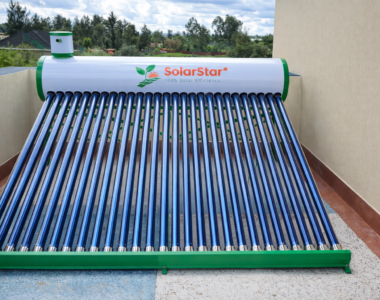
A solar water heater is a renewable energy system that converts sunlight into heat energy used to warm water. Instead of relying on electricity or gas, the system captures solar radiation through collectors installed on rooftops.
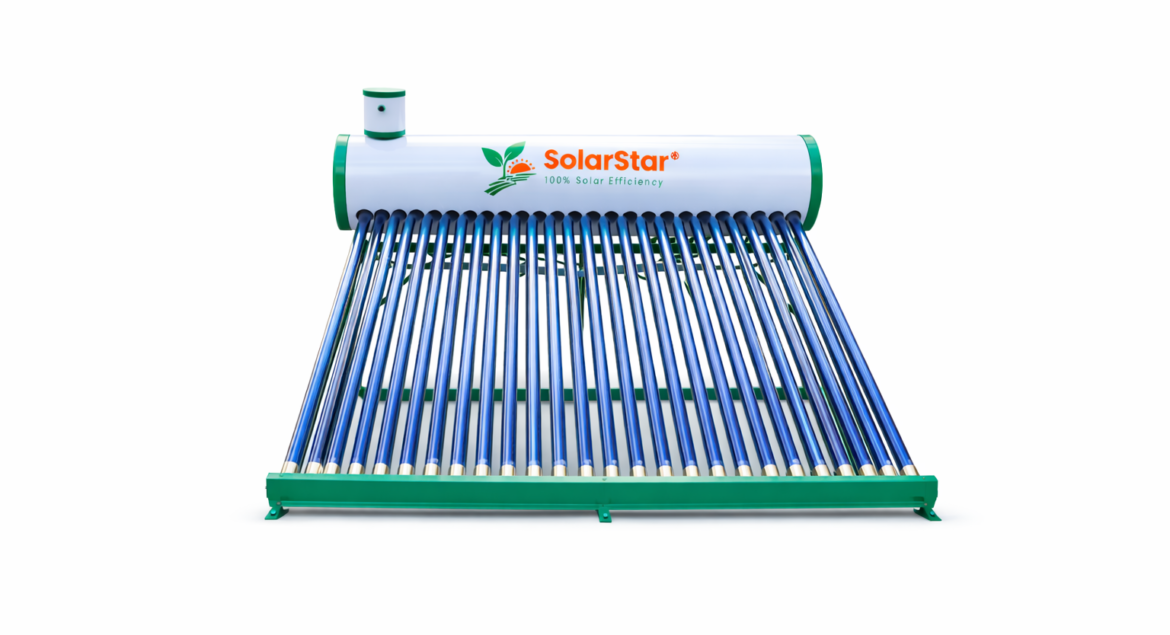
A typical solar water heating system consists of:
Solar collector tubes that absorb sunlight
An insulated storage tank for storing hot water
Water circulation pipes connecting the system
A mounting structure that supports the system on the roof
Together, these components work to produce hot water using free solar energy from the sun.
Main Components of a Solar Water Heater
Solar Collectors
Solar collectors are the most important part of the system. These collectors, often in the form of evacuated glass tubes, absorb sunlight and convert it into heat.
Storage Tank
The storage tank holds the heated water. It is insulated to keep the water hot for many hours, allowing users to access hot water even after sunset.
Circulation Pipes
The pipes connect the collectors to the storage tank and allow water to circulate through the system.
Mounting Frame
The mounting frame supports the entire system and positions the collectors at an angle that maximizes sunlight absorption.
How Solar Water Heaters Work
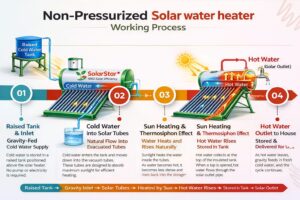
Solar water heaters operate using a natural process called thermosiphon circulation, which allows water to circulate without pumps or electricity.
1. Solar Collectors Absorb Sunlight
Solar collectors installed on the roof capture sunlight and convert it into heat energy.
2. Water Inside the Tubes Heats Up
As the collectors absorb solar radiation, the water inside the tubes becomes hot.
3. Hot Water Rises to the Storage Tank
Hot water is lighter than cold water, so it naturally rises into the insulated storage tank.
4. Cooler Water Flows Back to the Collectors
Cooler water flows down from the tank into the collector tubes to be heated again.
This continuous cycle allows the system to produce hot water throughout the day as long as sunlight is available.
Benefits of Solar Water Heaters
Installing a solar water heating system offers several advantages for households and businesses.
Reduced Electricity Bills
Solar water heaters can reduce electricity consumption for water heating by up to 80%.
Environmentally Friendly
Solar systems use renewable solar energy, helping reduce greenhouse gas emissions.
Long Lifespan
Most solar water heaters last 15–20 years with proper maintenance.
Low Maintenance
Solar systems require minimal servicing compared to electric water heaters.
Reliable Hot Water Supply
Insulated storage tanks keep water hot for many hours, ensuring a steady supply.